
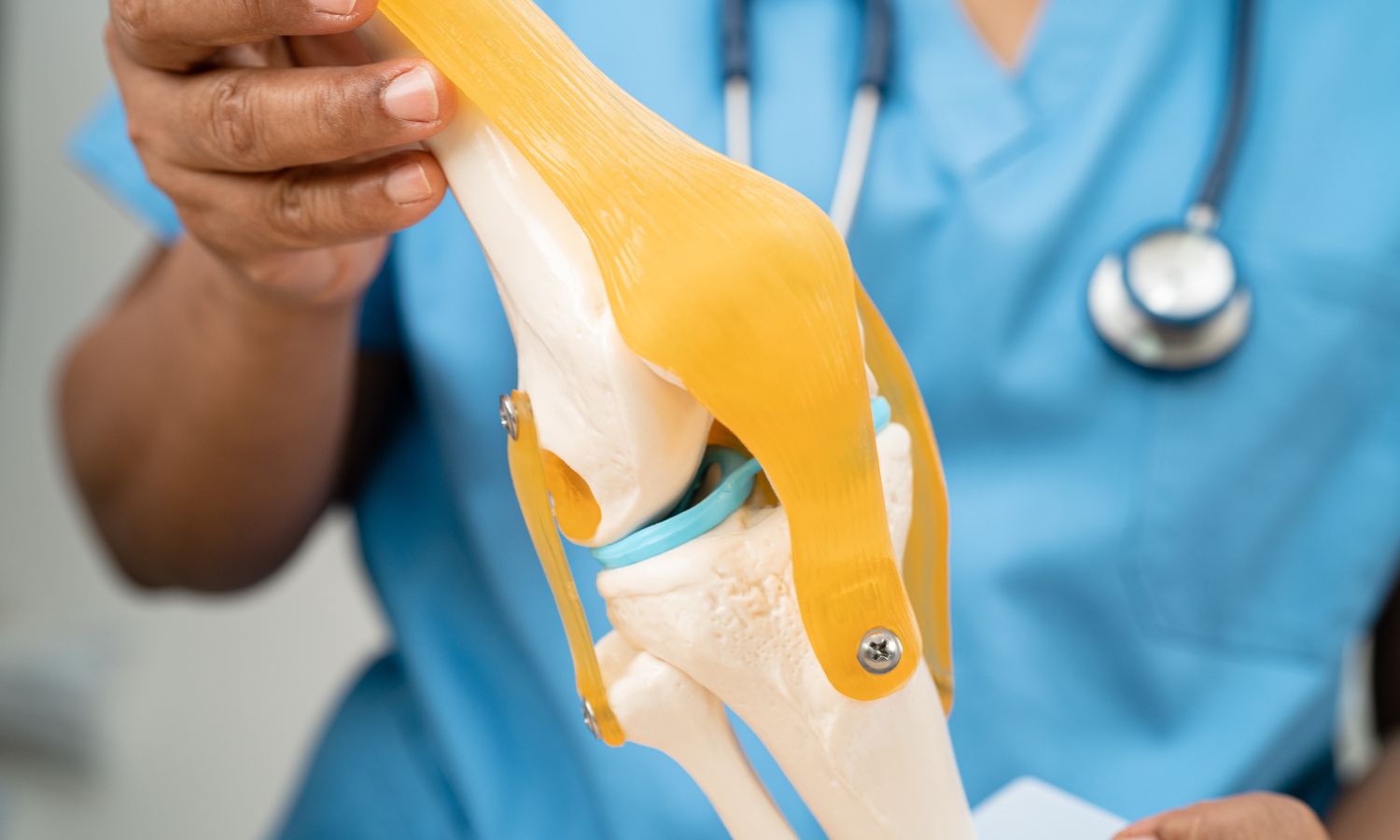
Knee Replacement Surgery
How Knee Replacement Surgery is Done
Knee Replacement Surgery
Knee replacement surgery, also known as knee arthroplasty, is a procedure used to relieve persistent pain and improve mobility when the knee joint has been severely damaged by arthritis or other conditions. During the surgery, damaged portions of the knee are resurfaced with artificial components designed to restore joint function.
Knee replacement may be considered when pain, stiffness and restricted movement begin to interfere with walking, climbing stairs, sleeping or everyday activities. The type of replacement—total or partial—depends on the extent and location of joint damage, ligament stability, bone quality and individual patient factors.
When Is Knee Replacement Surgery Needed?
Not every patient with knee pain needs surgery. An orthopaedic evaluation helps determine whether knee replacement is appropriate based on symptoms, examination and imaging.
Knee replacement surgery may be considered when you have:
- Severe or persistent knee pain
- Difficulty walking, climbing stairs or performing daily activities
- Advanced osteoarthritis or other significant arthritis
- Pain or stiffness that continues despite medicines, physiotherapy, injections or lifestyle changes
- Significant joint damage visible on X-rays or other imaging
- Knee deformity or progressive loss of movement
If you are searching for Knee Replacement Surgeons Near Me, it is important to consult an experienced orthopaedic surgeon who can assess whether surgery is actually required or whether non-surgical treatment may still be appropriate.
Total Knee Replacement vs Partial Knee Replacement
Knee replacement can broadly be divided into total and partial knee replacement.
Total Knee Replacement (TKR)
In total knee replacement, the damaged surfaces of the knee are resurfaced with artificial components. It is generally considered when arthritis or damage affects multiple compartments of the knee.
Partial Knee Replacement (PKR)
Partial knee replacement, also called unicompartmental knee replacement, replaces only the damaged compartment of the knee while preserving the healthy portions of the joint. It may be suitable when damage is limited to one compartment and the supporting ligaments are sufficiently stable.
How Does a Surgeon Decide Between TKR and PKR?
| Total Knee Replacement | Partial Knee Replacement |
|---|---|
| Used when damage involves more of the knee | Used when damage is limited to one compartment |
| A larger portion of the joint is resurfaced | Only the affected compartment is treated |
| May be appropriate for advanced or widespread arthritis | May be suitable for selected patients with limited arthritis |
| Recovery depends on individual factors | Recovery may be shorter in suitable patients |
The choice is not based on age alone. Your surgeon considers the extent of arthritis, ligament stability, bone quality, knee alignment, activity level and overall health.
What Are the Benefits of Knee Replacement Surgery?
For appropriately selected patients, knee replacement surgery can help reduce pain and improve everyday function.
Potential benefits include:
- Relief from severe arthritis-related knee pain
- Improved mobility and walking ability
- Better ability to perform daily activities
- Improved knee function
- Potential improvement in overall quality of life
The outcome varies from patient to patient and depends on factors such as the condition of the knee before surgery, overall health and commitment to rehabilitation.
What Are the Risks and Complications of Knee Replacement Surgery?
Knee replacement is a major surgical procedure, and like any surgery, it has potential risks. Most patients recover without major complications, but it is important to understand the possibilities before making a treatment decision.
Infection
An infection can develop around the surgical wound or, rarely, deeper around the artificial joint. Treatment may involve antibiotics and, in some cases, additional surgery.
Blood Clots / DVT
Deep vein thrombosis (DVT) can occur after surgery. Measures such as early movement, compression and prescribed blood-thinning medication may be used to reduce the risk.
Nerve or Blood Vessel Injury
Nerves, blood vessels or surrounding tissues can rarely be injured during surgery.
Persistent Pain or Stiffness
Some patients may continue to experience pain, stiffness or limited movement after surgery. Physiotherapy and appropriate follow-up are important during recovery.
Implant Loosening or Wear
Artificial knee components can gradually wear or loosen over time. This can sometimes cause pain or instability.
Need for Revision Surgery
If an implant becomes significantly worn, loose or affected by infection or another complication, revision surgery may be required.
Recovery After Knee Replacement Surgery
Recovery after knee replacement is a gradual process and differs from patient to patient.
First Few Days After Surgery
Patients are usually encouraged to begin moving and walking with assistance soon after surgery. Pain management and early mobilisation are important parts of recovery. Depending on individual circumstances, hospital stay can vary.
When Can You Walk After Knee Replacement?
Walking generally begins early with the support of a physiotherapist and walking aid such as crutches or a walker. The time taken to walk independently depends on strength, balance, pain, age, overall health and the type of surgery.
Physiotherapy and Exercises
Physiotherapy helps improve knee movement, strength and function. Following the prescribed exercise programme consistently can support recovery and help patients gradually return to everyday activities.
When Can You Return to Normal Activities?
Many patients gradually return to routine activities over several weeks. Driving and returning to work depend on the type of surgery, occupation and individual recovery. Full recovery can take several months.
How Long Does a Knee Replacement Last?
Modern knee replacement implants are designed to be durable. Many knee replacements last 15–20 years or longer, while some may remain functional for around 25 years or more. Individual implant longevity varies depending on factors such as age, activity level, weight, implant type, surgical factors and overall health.
Regular follow-up can help identify problems such as wear or loosening and address them appropriately.
Robotic-Assisted vs Conventional Knee Replacement
What Is Robotic-Assisted Knee Replacement?
Robotic-assisted knee replacement uses computer-assisted technology to help the surgical team plan the procedure and guide bone preparation and implant positioning.
How Is It Different From Conventional Surgery?
Both approaches are designed to achieve accurate positioning and restore knee function. Robotic assistance can provide additional planning and intraoperative information, but it does not replace the surgeon's clinical judgement.
Is Robotic Knee Replacement Suitable for Everyone?
Not necessarily. Suitability depends on the patient's anatomy, extent of arthritis, previous surgeries, overall health and the surgeon's assessment. The appropriate technique should be selected according to the individual case rather than assuming that one approach is suitable for everyone.
Knee Replacement Surgery Cost in India
The cost of knee replacement surgery in India can vary significantly depending on several factors. These may include:
- Type and quality of implant
- Hospital and room category
- Total or partial knee replacement
- Surgical technique and technology used
- Pre-operative investigations
- Hospital stay
- Medicines and rehabilitation
- Physiotherapy and follow-up care
Since costs can change between hospitals and individual cases, patients should obtain a current, case-specific estimate from the hospital before surgery.
Life After Knee Replacement Surgery
Knee replacement is intended to help patients return to a more active daily life after recovery.
Walking and Exercise
Walking is generally encouraged as part of rehabilitation. Patients should gradually increase activity according to their surgeon's and physiotherapist's advice.
Low-Impact Activities
After adequate recovery, many patients can participate in low-impact activities such as walking, swimming and cycling.
Returning to Work
The timeline depends on the type of work. Desk-based work may be resumed earlier than physically demanding occupations.
Activities to Avoid or Modify
High-impact activities such as running, jumping and contact sports may place additional stress on the artificial joint and may need to be avoided or modified. Your surgeon can advise you on activities appropriate for your individual recovery.
Why Choose Dr. Amit Sharma for Knee Replacement Surgery?
Dr. Amit Sharma is an internationally trained orthopaedic surgeon with 25+ years of experience, specialising in joint replacement, arthroscopy, sports injuries and minimally invasive complex trauma surgery. His advanced training includes fellowships in knee replacement, and a postgraduate diploma in Sports and Exercise Medicine from South Wales, England.
He provides orthopaedic care in Ghaziabad and Delhi, with consultations available at Yashoda Super Speciality Hospital, Kaushambi, Yashoda Medicity, Indirapuram, Cosmic Clinic, Indirapuram and City Clinic, Krishna Nagar.
Patients looking for a knee replacement surgeon in Indirapuram, knee replacement surgeon in Ghaziabad, or information about a Best Knee Replacement Surgeon in Delhi NCR can consult Dr. Amit Sharma for an individual assessment and treatment plan.
Frequently Asked Questions About Knee Replacement
When is knee replacement surgery recommended?
It may be recommended when severe knee pain and functional limitations persist despite appropriate non-surgical treatment, particularly when imaging shows significant joint damage.
What is the difference between total and partial knee replacement?
Total knee replacement resurfaces the damaged portions of the entire knee joint, while partial knee replacement treats only the affected compartment in appropriately selected patients.
How long does it take to recover from knee replacement?
Recovery varies between individuals. Many patients resume everyday activities progressively over several weeks, while full recovery can take several months.
How long does a knee replacement last?
Many knee replacements last 15–20 years or longer, although implant longevity varies between individuals.
When can I walk after knee replacement surgery?
Walking usually begins soon after surgery with support and physiotherapy, depending on the patient's condition and surgical recovery.
Is robotic knee replacement better than conventional knee replacement?
Robotic assistance is a surgical technology rather than a guarantee of better results for every patient. The appropriate technique depends on the patient's condition, anatomy and surgeon's assessment.
What are the risks of knee replacement surgery?
Potential risks include infection, blood clots, nerve or blood vessel injury, persistent pain or stiffness, implant wear or loosening and, in some cases, revision surgery.
How much does knee replacement surgery cost in India?
The cost varies according to the implant, hospital, type of surgery, surgical technique, hospital stay and rehabilitation. A current estimate should be obtained after clinical evaluation.