
20-Oct-2026
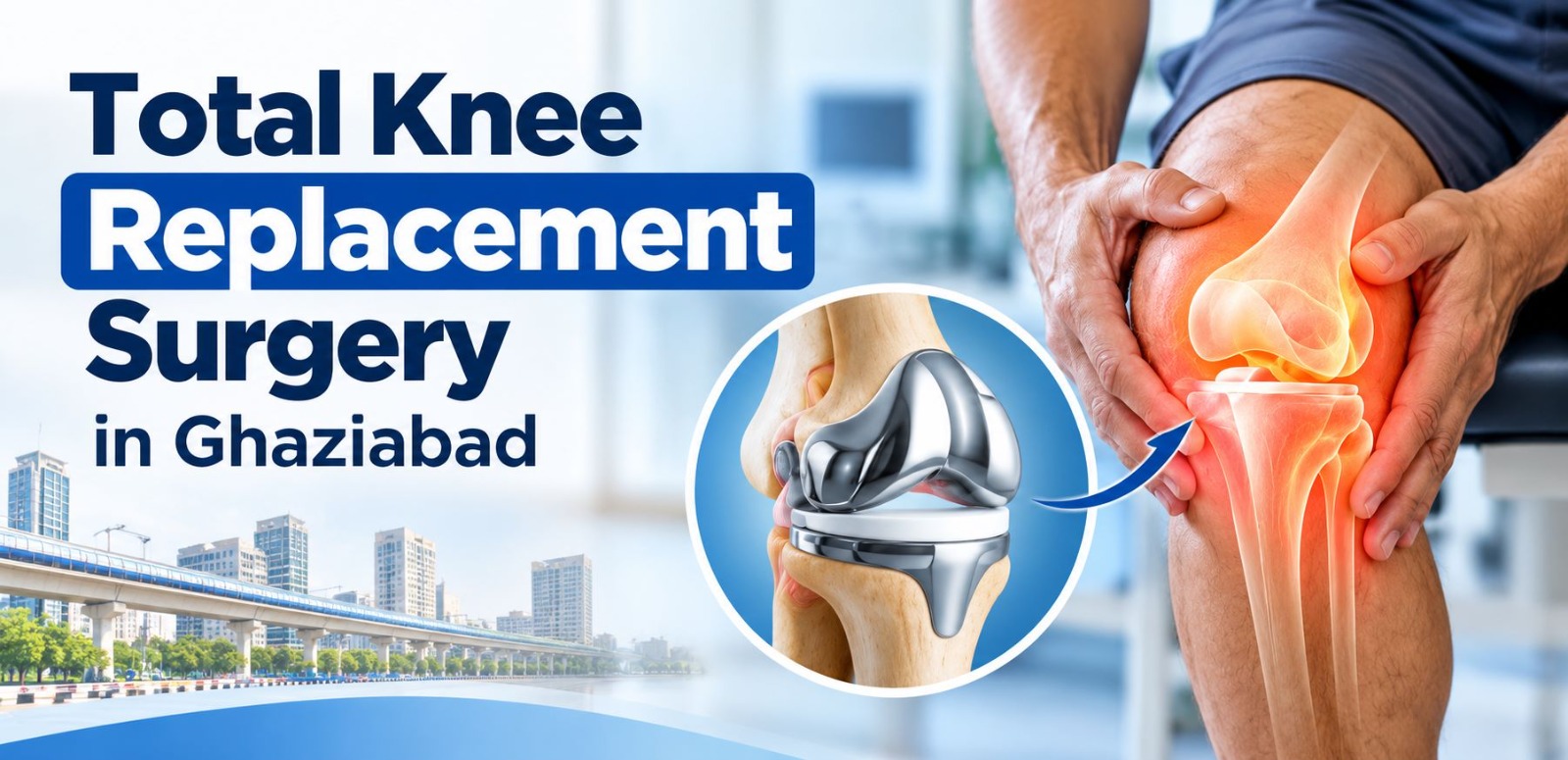
Total Knee Replacement Surgery in Ghaziabad
Knee pain can gradually affect your ability to walk, climb stairs, sit comfortably or perform everyday activities. While medication, physiotherapy and lifestyle changes can help manage knee problems in their early stages, advanced knee arthritis may require surgical intervention.
Total Knee Replacement (TKR) is an established surgical procedure recommended for patients experiencing severe knee joint damage, persistent pain and restricted mobility. The procedure involves replacing damaged joint surfaces with artificial implants to reduce pain and improve knee function.
If you are considering Total Knee Replacement Surgery in Ghaziabad, Noida or Vaishali, understanding the procedure, its benefits, recovery process and associated costs can help you make an informed decision.
Dr Amit Sharma, an internationally trained Orthopaedic Surgeon with over 26 years of experience, specialises in joint replacement, arthroscopy and sports injuries. He provides comprehensive orthopaedic care with a focus on accurate diagnosis and appropriate treatment planning.
What Is Total Knee Replacement?
Total Knee Replacement is a surgical procedure in which damaged cartilage and bone surfaces of the knee joint are removed and replaced with artificial components known as implants.
The procedure is commonly recommended for patients with advanced osteoarthritis, rheumatoid arthritis or other conditions that cause significant damage to the knee joint.
During total knee replacement surgery, the surgeon removes the damaged portions of the thigh bone (femur) and shin bone (tibia). These surfaces are then replaced with specially designed metal and medical-grade plastic components that allow the knee joint to move more smoothly.
The primary goals of Total Knee Replacement are to:
Reduce chronic knee pain.
Improve joint movement and flexibility.
Restore mobility and walking ability.
Correct certain knee deformities.
Improve overall quality of life.
The type of implant and surgical approach are selected according to the patient's age, activity level, bone condition and overall health.
Knee Replacement Surgery
Knee Replacement Surgery is generally considered when conservative treatments no longer provide sufficient relief from pain and stiffness.
Conditions such as advanced osteoarthritis can gradually wear away the protective cartilage between the bones, resulting in friction, inflammation and difficulty moving the knee.
Depending on the extent of joint damage, a surgeon may recommend partial or total knee replacement.
In Total Knee Replacement Surgery, the damaged surfaces of the knee joint are replaced with artificial implants. The procedure is performed under suitable anaesthesia, and patients are usually encouraged to begin assisted movement and walking soon after surgery, depending on their medical condition.
Choosing an experienced knee replacement surgeon is important for evaluating the condition, selecting the appropriate implant and planning rehabilitation.
Types of Knee Replacement
Knee replacement procedures are selected based on the number of knees affected, the extent of joint damage and the patient's overall medical condition.
Some commonly performed approaches include:
Single/Unilateral Total Knee Replacement
Single or unilateral Total Knee Replacement involves replacing the damaged joint surfaces of one knee.
It is generally recommended for patients who have severe arthritis or joint damage in one knee, particularly when other treatment options have not provided adequate relief.
The procedure aims to reduce pain, improve knee stability and help patients gradually return to their routine activities.
Bilateral Total Knee Replacement
Bilateral Total Knee Replacement involves replacing both knee joints.
It may be considered for patients experiencing severe arthritis in both knees, especially when pain and mobility restrictions affect both sides.
Depending on the patient's overall health, age and medical fitness, the surgeon may recommend simultaneous bilateral knee replacement (both knees during one surgical session) or staged surgery (each knee operated on separately).
The decision is made after carefully assessing the patient's health, anaesthesia risks and rehabilitation requirements.
Robotic Knee Replacement
Robotic Knee Replacement uses advanced computer-assisted technology to help the surgeon plan and perform the procedure with greater precision. Before surgery, detailed imaging helps create a personalised plan based on the patient's knee anatomy. During surgery, the robotic system assists the surgeon in accurately positioning and aligning the knee implants.
Understanding Total Knee Replacement Surgery
Understanding the surgical process can help patients feel more confident and prepared before undergoing treatment.
1. Pre-surgical evaluation
Before surgery, the orthopaedic surgeon evaluates the patient's symptoms, medical history, knee movement and overall health. X-rays and other investigations may be recommended to assess the extent of joint damage.
2. Anaesthesia and procedure
The surgery is performed under appropriate anaesthesia, which may include spinal or general anaesthesia. The damaged cartilage and bone surfaces are removed, and artificial implants are positioned to restore the joint's alignment and function.
3. Implant placement
The surgeon carefully positions the artificial components to ensure appropriate joint stability and movement. The implant selection depends on individual anatomy and clinical requirements.
4. Post-operative care
Following surgery, patients are monitored and provided with pain management, wound care and assistance with initial movement.
5. Physiotherapy and rehabilitation
Physiotherapy is an essential part of recovery. Patients are guided through exercises to improve knee movement, strengthen surrounding muscles and gradually regain walking ability.
When Should You Consider Total Knee Replacement?
Not every patient experiencing knee pain requires surgery. However, Total Knee Replacement may be considered when knee damage becomes severe and begins to interfere significantly with everyday activities.
You may need an orthopaedic evaluation if you experience:
Persistent knee pain, even while resting.
Difficulty walking or standing for extended periods.
Severe stiffness and restricted knee movement.
Difficulty climbing stairs or getting up from a chair.
Swelling and inflammation around the knee joint.
Knee deformity, such as inward or outward bending.
Limited relief from medication, physiotherapy or other non-surgical treatments.
An orthopaedic specialist can assess your condition and determine whether surgery is appropriate.
When Does a Doctor Recommend Total Knee Replacement Surgery?
A doctor may recommend Total Knee Replacement Surgery when diagnostic findings and clinical symptoms indicate significant and irreversible damage to the knee joint.
Some common conditions that may lead to a recommendation for surgery include:
Advanced Osteoarthritis: Gradual wear and tear of the knee cartilage can cause severe pain, stiffness and difficulty walking.
Rheumatoid Arthritis: This inflammatory condition can damage the cartilage and surrounding structures of the knee joint.
Post-Traumatic Arthritis: Previous knee injuries or fractures may lead to long-term joint damage and arthritis.
Severe Knee Deformity: Advanced joint damage can affect the natural alignment of the knee, making movement painful and difficult.
The decision to undergo surgery is individualised. A doctor generally considers the severity of symptoms, X-ray findings, response to previous treatments and the patient's overall health before recommending knee replacement.
Total Knee Replacement Surgery Cost in India
The cost of Total Knee Replacement Surgery in India can vary depending on several factors. These include the type and quality of implant, hospital facilities, surgeon's fees, anaesthesia, room category, medical investigations and post-operative care.
Other factors, such as whether one or both knees require replacement and the patient's existing medical conditions, may also influence the overall treatment cost.
Patients looking for Total Knee Replacement Surgery in Ghaziabad, Noida or Vaishali should discuss the expected treatment expenses with their orthopaedic surgeon and hospital before proceeding.
An individual consultation helps determine the appropriate surgical approach and provides a clearer understanding of the estimated cost.
Total Knee Replacement Surgery Time
The duration of Total Knee Replacement Surgery depends on the patient's condition, surgical complexity and whether one or both knees are being operated on.
In general, a single-knee replacement procedure takes approximately 1–2 hours. Additional time may be required for anaesthesia, preparation and post-operative monitoring.
Patients should also account for their hospital stay and rehabilitation period as part of the overall treatment journey.
Total Knee Replacement Surgery Recovery Time
Recovery after Total Knee Replacement Surgery is gradual and varies from patient to patient.
Most patients are encouraged to begin assisted walking within the first 24 hours after surgery, depending on their medical condition and the surgeon's advice.
A general recovery timeline includes:
First few days: Assisted walking, basic knee movements and initial physiotherapy.
2–6 weeks: Gradual improvement in mobility, strength and everyday activities.
6–12 weeks: Many patients experience improved walking ability and greater independence.
3–6 months: Continued strengthening, functional improvement and rehabilitation.
Complete recovery may take longer depending on age, general health, muscle strength and commitment to physiotherapy.
Following the surgeon's instructions and maintaining a consistent rehabilitation routine are important for achieving the best possible outcome.
Consult Dr Amit Sharma for Total Knee Replacement in Ghaziabad
Living with persistent knee pain can affect your independence and everyday activities. Timely evaluation and the right treatment approach can help prevent unnecessary discomfort and improve mobility.
Dr Amit Sharma is an internationally trained Orthopaedic Surgeon with over 26 years of experience in orthopaedics and more than 10,000 surgeries. He specialises in joint replacement, arthroscopy, sports injuries and complex trauma management.
With a focus on accurate diagnosis, individualised treatment planning and comprehensive patient care, Dr Amit Sharma helps patients understand their treatment options and make informed decisions.
If you are experiencing chronic knee pain or considering Total Knee Replacement Surgery in Ghaziabad, Noida or Vaishali, schedule an orthopaedic consultation to understand the treatment options suitable for your condition.
Book Your Consultation
Dr Amit Sharma
Orthopaedic Surgeon
Consultation: 8178665625
Frequently Asked Questions (FAQs)
1. Is Total Knee Replacement Surgery Safe?
Yes, Total Knee Replacement is an established surgical procedure that is generally considered safe when performed on appropriately selected patients by an experienced orthopaedic team. Like any major surgery, it carries certain risks, including infection, blood clots, stiffness and implant-related complications. A detailed pre-operative evaluation helps assess and minimise these risks.
2. How Soon Can I Walk After Surgery?
Most patients are encouraged to start standing and walking with assistance within 24 hours after Total Knee Replacement Surgery. The exact timing depends on the patient's health, surgical recovery and the treating surgeon's recommendations. Physiotherapy plays an important role in regaining strength and mobility.
3. Who Should Avoid Knee Replacement Surgery?
Knee replacement may not be immediately suitable for patients with active infections, certain uncontrolled medical conditions or other health concerns that increase surgical risks. Patients with mild knee arthritis or those who have not yet explored appropriate non-surgical treatments may also not require surgery. A thorough medical assessment helps determine whether knee replacement is the right option.
4. How Long Does a Total Knee Replacement Implant Last?
Modern knee replacement implants are designed to provide long-term function. Their lifespan depends on factors such as implant quality, surgical technique, body weight, activity levels and overall health. Many modern implants can last 15–20 years or longer, although individual results vary.
5. Can I Climb Stairs After Total Knee Replacement?
Yes. Most patients gradually regain the ability to climb stairs following surgery and rehabilitation. The timeline varies depending on muscle strength, knee flexibility and individual recovery. Patients should follow their physiotherapist's guidance before returning to demanding activities.